Punjab School Headmaster & Senior Headmaster Recruitment 2026
Punjab School Headmaster & Senior Headmaster Recruitment 2026: Complete Eligibility Criteria, PPSC Syllabus & 1,629 District-Wise Vacancies
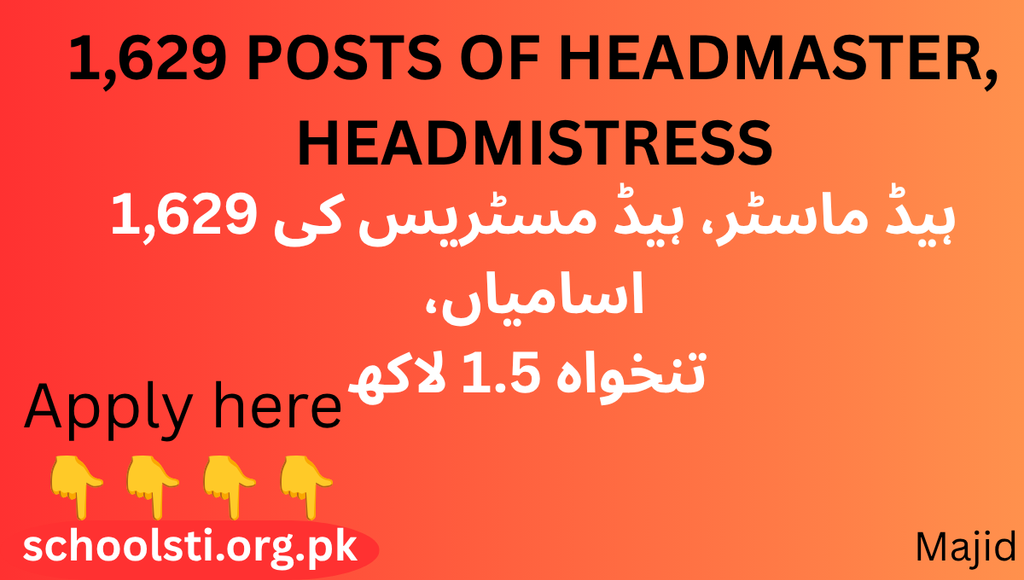
The wait for educational leadership roles in Punjab’s public sector is officially over. On November 4, 2026, the Government of the Punjab Finance Department issued a landmark official concurrence (Letter No. FD/EnYA/HE/O/261104/02520 / SO(S)15-37/2025) approving the creation of 1,629 new posts for Headmasters, Headmistresses, Senior Headmasters, and Senior Headmistresses across 40 districts of the province.
What makes this recruitment cycle historic is a major structural shift in public sector hiring: the Finance Department has approved these 1,629 positions on a Lump-sum Pay Package in lieu of the abolished Basic Pay Scale (BS-17 and BS-18) posts. Funded directly through the Provincial Finance Commission (PFC) share of respective District Education Authorities (DEAs), this recruitment aims to eliminate the administrative leadership vacuum in Punjab’s high and higher secondary schools.
Whether you are a fresh M.Ed. graduate, a seasoned public school educator, or an aspirant preparing for the Punjab Public Service Commission (PPSC) competitive examinations, understanding the exact qualification criteria, age limits, syllabus division, and district-wise seat allocation is essential to securing your spot.
Official Breakdown of the 1,629 Newly Created Posts
In reference to the Punjab School Education Department (SED) letter No.SO(SE-M)1-173/2026 dated October 23, 2026, the Finance Department abolished 1,629 traditional BS-17 and BS-18 vacancies and replaced them with an identical number of Lump-sum Pay Package positions.
- Headmaster (Male – formerly BS-17): 654 Posts
- Headmistress (Female – formerly BS-17): 748 Posts
- Senior Headmaster (Male – formerly BS-18): 177 Posts
- Senior Headmistress (Female – formerly BS-18): 50 Posts
- Total Approved Vacancies: 1,629 Posts
Per paragraph 3 of the official notification signed by Section Officer-Schools (Education FD) Arshad Hussain Dogar, the Administrative Department has been advised to approach the Contract Appointment Regularization Committee (S&GAD) to finalize the formal eligibility rules, after which the Selection Board headed by the Chief Secretary will recommend the exact lump-sum salary figures for final sign-off by the Chief Minister of Punjab. For ongoing departmental updates and earlier policy summaries on how Punjab announces 1600 school headmaster jobs via PPSC 2026, candidates should closely track official cabinet releases.
Detailed Eligibility Criteria & Requirements
To compete for these prestigious school leadership positions, candidates must fulfill both academic and professional teaching degree requirements from universities recognized by the Higher Education Commission (HEC) of Pakistan.
1. Requirements for Headmaster / Headmistress (BS-17 Equivalent)
This entry-level gazetted administrative tier is ideal for educators and fresh postgraduates who possess a strong pedagogical foundation without needing mandatory prior administrative experience.
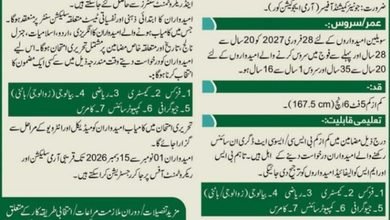
- Academic Qualification: Master’s Degree (MA / MSc) or a 4-Year BS Honors Degree (minimum 2nd Division) in any discipline from an HEC-recognized university.
- Professional Qualification: B.Ed., M.Ed., or MA Education (minimum 2nd Division).
- Experience Requirement: No prior teaching or administrative experience is required for BS-17 equivalent direct recruitment.
- Age Limit: 21 to 35 Years, plus General Age Relaxation as per Punjab Government contract/recruitment rules (typically 5 years for male candidates and 8 years for female candidates, bringing the effective upper limit to 40 for males and 43 for females, alongside special relaxations for in-service government employees).
2. Requirements for Senior Headmaster / Senior Headmistress (BS-18 Equivalent)
Designed for seasoned educational leaders and mid-career professionals, the Senior Headmaster/Headmistress role requires advanced research qualifications alongside verifiable field experience.
- Academic Qualification: M.Phil. Degree in Arts or Science (minimum 2nd Division) from an HEC-recognized institution.
- Professional Qualification: M.Ed., MA Education, or B.Ed. (minimum 2nd Division).
- Mandatory Experience: Minimum 5 Years of Teaching or Administrative Experience in a recognized educational institution after acquiring the prescribed qualification.
- Age Limit: 21 to 35 Years, plus General Age Relaxation as per Government of the Punjab rules.
Comparison: Headmaster (BS-17) vs. Senior Headmaster (BS-18)
To help you determine which post aligns with your academic profile and career trajectory, review the side-by-side comparison below:
| Feature / Requirement | Headmaster / Headmistress (BS-17 Eq.) | Senior Headmaster / Senior Headmistress (BS-18 Eq.) |
|---|---|---|
| Total Male Seats | 654 Vacancies | 177 Vacancies |
| Total Female Seats | 748 Vacancies | 50 Vacancies |
| Minimum Academic Degree | Master’s (MA/MSc) or BS (4-Year) — 2nd Div | M.Phil. (Arts / Science) — 2nd Div |
| Professional Degree | B.Ed. / M.Ed. / MA Education (2nd Div) | M.Ed. / MA Education / B.Ed. (2nd Div) |
| Required Experience | None (Fresh graduates eligible) | 5 Years Teaching or Administrative Experience |
| Base Age Limit | 21 to 35 Years (+ Govt. Age Relaxation) | 21 to 35 Years (+ Govt. Age Relaxation) |
| Compensation Model | Lump-Sum Pay Package (Replacing BS-17) | Lump-Sum Pay Package (Replacing BS-18) |
| Exam Format | 100 MCQs (90 Minutes, 0.25 Negative Marking) | 100 MCQs (90 Minutes, 0.25 Negative Marking) |
| Syllabus Focus (80%) | B.Ed. Course, Pedagogy, Psychology, Admin | M.Phil. / M.Ed. Course, Leadership, Management |
PPSC Examination Pattern & Complete Syllabus Breakdown
The recruitment exam consists of a single one-paper objective test comprising 100 Multiple Choice Questions (MCQs) to be solved within 90 minutes. Standard PPSC negative marking of 0.25 marks per wrong answer applies.
Part I: 80% Qualification-Related Core Subjects (80 Marks)
The decisive 80-mark block tests your mastery of educational sciences, school leadership, and instructional pedagogy. While BS-17 papers center on standard B.Ed./M.Ed. coursework, BS-18 papers elevate the difficulty to M.Phil. and advanced educational leadership standards.
- Educational Psychology & Human Development: Cognitive, moral, and psychosocial development theories (Piaget, Vygotsky, Erikson, Kohlberg), learning theories (Behaviorism, Cognitivism, Constructivism), individual differences, intelligence assessment, and student motivation.
- Pedagogy & Instructional Strategies: Modern teaching methodologies, lesson planning, micro-teaching, Bloom’s Taxonomy of Educational Objectives (Cognitive, Affective, and Psychomotor domains), classroom management, and Audio-Visual (AV) aids.
- Curriculum Development & Implementation: Foundations of curriculum (philosophical, psychological, sociological), curriculum design models (Tyler, Taba, Wheeler), curriculum change, and textbook evaluation in Pakistan.
- Educational Management, Administration & Leadership: Theories of educational administration (POSDCORB, Fayol, Weber, Taylor), leadership styles (Transformational, Transactional, Autocratic, Democratic, Laissez-faire), school plant management, financial rules (DDO powers, Punjab Procurement Regulatory Authority rules, school council / FTF management), and the Punjab Employees Efficiency, Discipline and Accountability (PEEDA) Act 2006.
- Educational Assessment, Measurement & Evaluation: Formative vs. summative assessment, norm-referenced vs. criterion-referenced testing, test construction, item analysis (item difficulty and discrimination index), reliability, and validity.
- Educational Research & Guidance (Crucial for BS-18): Quantitative vs. qualitative research designs, sampling techniques, hypothesis testing, variables, data collection tools, and student counseling frameworks.
Part II: 20% General Ability & General Knowledge (20 Marks)
Many high-scoring pedagogy students miss the interview merit cutoff because they neglect the 20-mark General Ability section. This segment covers nine diverse domains:
- General Knowledge (GK) & Current Affairs: International organizations, global capitals, currencies, recent geopolitical developments, and national socio-economic milestones.
- Pakistan Studies & Islamic Studies: Constitutional history of Pakistan (1956, 1962, 1973), Pakistan Movement, geography of Pakistan, fundamental tenets of Islam, Seerah, and Quranic sciences.
- English & Urdu Language: Vocabulary (synonyms, antonyms, idioms), prepositions, active/passive voice, direct/indirect narration, sentence correction, and classical Urdu grammar (Asnaf-e-Adab, Zarbul Amsal, and literary history).
- Everyday Science, Basic Mathematics & Computer Literacy: Human physiology, vitamins, environmental science, basic arithmetic (percentages, ratios, averages, age problems), MS Office suite shortcuts, operating systems, and internet fundamentals.
Complete District-Wise Vacancy Allocation (All 40 Districts)
Per the official Finance Department notification (FD/EnYA/HE/O/261104/02520 dated November 4, 2026), the 1,629 vacancies are distributed across all 40 districts of Punjab. Because the expenditure will be borne by each District Education Authority (DEA) from its available PFC share, examinees should review their district’s exact quota below:
| Sr. No. | District | HM Male (BS-17 Eq.) | HM Female (BS-17 Eq.) | Sr. HM Male (BS-18 Eq.) | Sr. HM Female (BS-18 Eq.) | Total Posts |
|---|---|---|---|---|---|---|
| 1 | Lahore | 28 | 29 | 5 | 2 | 64 |
| 2 | Kasur | 26 | 34 | 5 | 3 | 68 |
| 3 | Sheikhupura | 10 | 19 | 3 | 1 | 33 |
| 4 | Nankana Sahib | 8 | 18 | 3 | 3 | 32 |
| 5 | Gujranwala | 18 | 34 | 6 | 1 | 59 |
| 6 | Narowal | 31 | 10 | 8 | 3 | 52 |
| 7 | Gujrat | 26 | 31 | 9 | 3 | 69 |
| 8 | Hafizabad | 10 | 6 | 5 | 1 | 22 |
| 9 | Sialkot | 16 | 34 | 5 | 3 | 58 |
| 10 | M.B.Din | 16 | 29 | 5 | 0 | 50 |
| 11 | Wazir Abad | 6 | 13 | 4 | 0 | 23 |
| 12 | Faisalabad | 28 | 39 | 8 | 4 | 79 |
| 13 | Jhang | 16 | 26 | 5 | 4 | 51 |
| 14 | Chiniot | 6 | 9 | 5 | 0 | 20 |
| 15 | T.T.Singh | 20 | 19 | 5 | 3 | 47 |
| 16 | Rawalpindi | 27 | 23 | 5 | 2 | 57 |
| 17 | Jhelum | 19 | 19 | 6 | 3 | 47 |
| 18 | Attock | 26 | 19 | 6 | 1 | 52 |
| 19 | Chakwal | 26 | 19 | 4 | 0 | 49 |
| 20 | Murree | 8 | 10 | 0 | 0 | 18 |
| 21 | Talagang | 6 | 10 | 0 | 0 | 16 |
| 22 | Sargodha | 21 | 25 | 3 | 1 | 50 |
| 23 | Mianwali | 17 | 9 | 5 | 0 | 31 |
| 24 | Bhakkar | 9 | 9 | 3 | 0 | 21 |
| 25 | Khushab | 11 | 19 | 7 | 0 | 37 |
| 26 | Multan | 19 | 8 | 0 | 0 | 27 |
| 27 | Khanewal | 17 | 13 | 5 | 1 | 36 |
| 28 | Lodhran | 17 | 10 | 4 | 0 | 31 |
| 29 | Vehari | 10 | 26 | 5 | 0 | 41 |
| 30 | Sahiwal | 19 | 26 | 5 | 1 | 51 |
| 31 | Pakpattan | 17 | 11 | 4 | 1 | 33 |
| 32 | Okara | 19 | 19 | 6 | 3 | 47 |
| 33 | D.G.Khan | 19 | 10 | 2 | 0 | 31 |
| 34 | Layyah | 17 | 19 | 2 | 0 | 38 |
| 35 | Muzaffargarh | 8 | 7 | 3 | 1 | 19 |
| 36 | Rajanpur | 8 | 4 | 2 | 1 | 15 |
| 37 | Kot Addu | 4 | 4 | 2 | 0 | 10 |
| 38 | Bahawalpur | 21 | 13 | 2 | 0 | 36 |
| 39 | Bahawalnagar | 21 | 19 | 6 | 3 | 49 |
| 40 | R.Y.Khan | 28 | 22 | 9 | 1 | 60 |
| — | Grand Total | 654 | 748 | 177 | 50 | 1,629 |
To keep up with district-level DEA notifications, merit lists, and school recruitment circulars, bookmark the Schools STI educational notifications and news portal for timely verification.
Analysis
A close examination of the Finance Department’s November 4, 2026 notification reveals three critical takeaways for job seekers and public sector analysts:
- Transition from Basic Pay Scales to Lump-Sum Packages: By abolishing 1,629 BS-17 and BS-18 posts and recreating them on a Lump-sum Pay Package, the Punjab government is actively moving away from lifetime pension liabilities toward fixed-compensation, performance-driven contracts.
- Decentralized Fiscal Responsibility: Unlike traditional provincial budget allocations, the Finance Department explicitly mandated that the concerned District Education Authorities (DEAs) must bear the financial expenditure from their respective Provincial Finance Commission (PFC) shares. This means recruitment and retention will be tightly monitored at the district level.
- Demographic & Regional Seat Distribution: Faisalabad (79 seats), Gujrat (69 seats), Kasur (68 seats), Lahore (64 seats), and Rahim Yar Khan (60 seats) lead the province in total allocations, whereas newly carved or smaller districts like Kot Addu (10 seats), Rajanpur (15 seats), Talagang (16 seats), and Murree (18 seats) have significantly tighter competition pools. Furthermore, female educators hold a numerical edge in the BS-17 equivalent tier (748 female posts vs. 654 male posts), while male educators hold a wider margin in the BS-18 equivalent tier (177 male posts vs. 50 female posts).
Opinion
From an educational policy and career strategy standpoint, this 1,629-post recruitment drive is the single largest administrative hiring opportunity in Punjab’s School Education Department in over a decade. While some traditionalists may view the transition from regular BS-17/BS-18 scales to a Lump-sum Pay Package with skepticism due to the absence of conventional pension structures, the upside for high-performing educators is substantial. Lump-sum packages typically offer a significantly higher monthly take-home salary right from day one compared to the initial basic pay of BS-17 or BS-18.
For serious aspirants, waiting for the Selection Board and the Chief Minister to finalize the exact salary figure before opening your books would be a costly mistake. Once the S&GAD Contract Appointment Regularization Committee clears the file, the testing timeline will move rapidly. Candidates who master the 80% B.Ed./M.Ed. syllabus—specifically focusing on educational psychology, curriculum models, and Punjab’s school administration rules—while maintaining at least a 70% accuracy rate in the 20% General Knowledge block will effortlessly place themselves in the top tier of the merit list.
Frequently Asked Questions (FAQs)
1. Can a candidate with a 1.5-year B.Ed. or ADE apply for the Headmaster (BS-17 equivalent) post? Yes. Any HEC-recognized B.Ed. degree (whether 1-year, 1.5-year, 2.5-year, or 4-year Honors), M.Ed., or MA Education in at least 2nd Division fulfills the professional qualification requirement when paired with a Master’s (MA/MSc) or 4-Year BS degree.
2. Are these 1,629 Headmaster and Senior Headmaster jobs permanent or contract-based? Per the Finance Department’s official letter dated November 4, 2026, these posts have been created on a Lump-sum Pay Package in lieu of abolished BS-17 and BS-18 posts. They are contract-based positions whose specific terms and pay packages are being finalized via the S&GAD Contract Appointment Regularization Committee and the Selection Board.
3. Does private school teaching experience count toward the 5-year requirement for Senior Headmaster (BS-18)? Yes, provided the experience was gained after completing the prescribed qualification at a school or college formally registered and recognized by the relevant government regulatory authority (such as SED, BISE, or HEC), and is backed by verifiable service certificates countersigned by the District Education Officer (DEO) or relevant authority.
4. Can in-service Primary, Elementary, or Secondary School Educators (PST/EST/SSE) and STIs apply? Absolutely. In-service public school teachers and School Teacher Interns (STIs) who meet the academic (MA/MSc/BS or M.Phil.) and professional (B.Ed./M.Ed.) criteria are strongly encouraged to apply. Regular government servants apply through proper departmental channels (NOC) and are eligible for specific in-service age relaxations under Punjab Government rules.
Conclusion
The approval of 1,629 Headmaster, Headmistress, Senior Headmaster, and Senior Headmistress posts marks a transformative moment for public school governance in Punjab. By combining a solid academic degree (Master’s/BS for BS-17 equivalent; M.Phil. + 5 years experience for BS-18 equivalent) with a professional teaching qualification (B.Ed./M.Ed./MA Education), thousands of educators across all 40 districts now have a clear pathway into gazetted-level educational leadership. Structure your study schedule around the 80/20 syllabus ratio today, prioritize conceptual clarity in pedagogy and school management, and position yourself ahead of the curve before the formal advertisement drops.